Sunday, April 3, 2011

The Who, What, and How of the Harlem Renaissance

  • The Harlem Renaissance was an African American cultural movement that was centered in the Harlem neighborhood of New York.
  • The Harlem Renaissance took place during the 1920s and early 1930s.
  • The Renaissance goes by several alternate names, including "the New Negro movement", "the New Negro Renaissance", and "the Negro Renaissance"
  • This renaissance marked the first time in history that African American literary works were taken seriously and brought to the Nation's attention.
  • This renaissance focused on the uprise of the credibility of African American media.
  • The movement began at the end of World War I.
  • One of the reasons the renaissance emerged was due to the formation of an African American middle class after the Civil War.
  • The renaissance was primarily a literary movement.
  • The movement occured during a period of upheaval in African American rights.
  • Many African Americans moved to northern cities to take advantage of employment oppritunities.
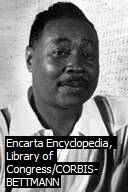
  • Claude McKay was born in Jamaica and later moved to and lived in America.
  • McKay was an author who wrote poetry and novels depicting life as an African American.
  • He was one of the first African American writers to attract a widespread white audience.
  • His first book was called "Home to Harlem", which depicted the life of an African American soldier returning home from war.
  • He converted to Catholicism in 1942.

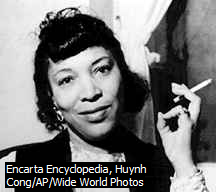
  • Zora Neale Hurston was an African American writer and folklorist.
  • Hurston was famous for her interpretations of African American folktales and her literary works focusing on African American life in the southern United States.
  • She wrote the novel "Their Eyes Were Watching God", which was published in 1937.
  • She was a major influence on African American writers during the Harlem Renaissance.
  • Hurston died due to health problems and passed relatively unrecognized by the literary community.
  • Jean Toomer was an influential American writer during the Harlem Renaissance.
  • Toomer's novel "Cane" was an innovative and influential literary landmark that signified a new energy in African American arts.
  • His novel "Cane" was a largely experimental combination of poetry and prose.
  • The book documented the life of African Americans in the rural South and urban North.
  • Was elected into the Georgia Hall of Fame in 2002.

**All photos and facts were taken from Microsoft Student/Encarta. No copyright infringement intended.

Thursday, March 24, 2011

Into the Wild: Creative Project

Download my creative project here: http://www.mediafire.com/?1f91b24aiw6351t

This presentation gives a factual account of the places visited by Christopher McCandless during his journey Into the Wild (see what I did there?) The presentation follows the plot structure of the book.

Monday, March 21, 2011

“Some readers admired the boy immensely for his courage and noble ideals; others fulminated that he was a reckless idiot, a wacko, a narcissist who perished out of arrogance and stupidity – and was undeserving of the considerable media attention he received.”

I'm not exactly sure how I feel about Christopher McCandless based on this quote. In my opinion, I think I can definitely see and kind of identify with Chris and what he was attempting to forge by going into the wild, however I do not think that it was so brash that it deserved the tons and tons of admiration that he recieved. I also think that Chris was being a little too cynical, and this blinded him in a way from the rest of the world that was attempting to embrace him.

Sunday, March 13, 2011

Into the Wild (Cont'd)

22.              Chris attempted to abandon his old life and seek a new one as a wanderer through the wild. This statement applies to Chris because he attempted to abandon his old reality and forge a new one, and Chris went into the desert to find this reality that he had tried to create.
23.              Jan is a 40 year old leather tramp who figured into Chris’ travels by traveling with him as he went into the wild.
24.              Chris traveled down the Colorado River to the Gulf of California, admiring the beauty of the surroundings that he passed along his 400 mile journey.
25.             His entries are in 3rd person.
26.           Chris reaches the conclusion that real meaning cannot be found through materialism or in some cases tangible happiness, rather the joy of living life to the fullest.
27.              Chris lived a very conventional life in Bullhead City in which he separated himself from a life of nomadism and settled down in the city.
28.              The people in Slabs are very diverse and somewhat amusing, and this is similar to the surrounding conditions.
29.              Jan recounted that Chris was very social at times and had a way with animals and music.
30.              Jan Burres concluded that Chris would be fine in Alaska, because he had gotten thus far without much trouble.

Chapter 6 & 7

31.              Franz asked Jon Krakauer for a copy of the magazine featuring the story of McCandless’s death in Alaska. He drove Alex to Colorado and left him to hitchhike after that. Krakauer thought that McCandless had the biggest lasting impact of Franz out of anyone Chris met during his travels.
32.              Anza-Borrego is a desert state park that Chris camped in.
33.              On New Year’s Eve 1957, Franz’s wife and child were killed by a drunk driver. This caused him to spiral into an alcohol-based depression until he finally decided to reform his life and adopt Okinawan children.
34.              Franz thought Chris was a well-off young man and that he wanted to help him make something of his life. He asked Chris to be his grandson.
35.              Franz was a master in leathermaking and taught Chris the tricks of the trade, and this helped them to bond.
36.              The author says the Chris didn’t want to be burdened by friendship.
37.             Chris told Franz to live a nomadic lifestyle and to “make every day a new horizon”, and Franz did just that.
38.              Franz learned that Chris had died from a hitchhiker that he picked up in 1992. It changed Franz’s life because it caused him to become an atheist and resume his drinking condition.
39.              Westerberg was annoyed because he was deprived of sleep and Chris hadn’t shown up for work.
40.              Chris said that he got along well with Carine but not with his father.

Chapter 8 &9

41.              The purpose of including the story of Gene Rossellini was to show how similar he was to McCandless. The author probably included Rossellini’s story to help the reader better understand McCandless’s own position.
42.              Waterman was a commendable mountaineer, and Krakauer respected that.
43.             The purpose of including Chris McCunn’s story is to give a parallel viewpoint on Chris McCandless’s story.
44.              Everetty Ruess was captivated by the American West after he journey there and found a kind of appreciation for it in himself.
45.              Sleight concludes the both Ruess and McCandless are of the same caliber, cut from the same cloth, have identical worlds and have a lot of the same dreams.
 

Tuesday, March 8, 2011

We're Halfway Into the Wild, Which Means We've Begun Our Journey Back Out

Chapter 1
1. Chris McCandless is a teenager from a socially prestigious family from the East Coast who abandoned his old life and went to roam the wild country before dying in an old bus in Alaska.
2. Jon Krakauer introduces themes that walk hand-in-hand with the overall feeling of tenacity that is applied to Chris’s overall story. Themes like perseverance, determination, and resilience are all introduced in the authors note.
3. The purpose of the quoted material at the beginning of Chapter 1 is to apply some background information before the story actually begins, to kind of “set the stage” for the events that take place in the book.
4. Alex is a fake identity that Chris made up for himself when writing letters to his sources.
5. Jim is a union electrician who picked up McCandless when he was hitchhiking.
6. Gallien said that McCandless was unprepared, determined, and around 5 foot 7. 
7. Gallien tried to advise McCandless not to go unprepared into the wild and offered to give him everything he needed to survive.
8. McCandless politely declined his offer and was given Gallien’s boots.
9. Gallien assumed that McCandless would be okay because of his instincts.
10. That statement is ironic because McCandless did end up going hungry and not walking out to the highway.

Chapter 2

11. Krakauer most likely did this in order to convey the necessary thoughts about the Northland with an author-type spin on it without seeming arrogant or pompous by writing it all himself.
12. The detailed descriptions of these places are probably intended to provide an accurate description of the surrounding land in order to try and instill the same kind of sensation that Chris is feeling into the reader.
13. The cause of Chris’s death was considered to be malnutrition.

Chapter 3

14. Westerberg is the owner of a grain elevator. He and Chris get along very well, and there is a sense of mutual respect between the two of them.
15. A rubber tramp is a homeless man that owns a car and a leather tramp is a homeless man that does not own a car. Both of these terms describe the least-privileged members of the community.
16. The author said this because he wanted to convey that McCandless had found solace in the people in Westerberg’s company.
17. He left Carthage because the cops started looking for him and he needed to resort back to living as a nomad.
18. The reader knows this because McCandless gave Westerberg his edition of War and Peace before he left town.
19. McCandless was born and raised in Annandale, Virginia to his parents Walt and Billie. He had a sister named Carine and graduated from Emory University in 1990.
20. McCandless kept politely declining material gifts that were offered to him, hinting that he was not as materialistic and other members of modern society.
21. He established a new persona for himself, Alexander Supertramp, and this symbolized how he had taken on a new life.

Chapter 4 & 5


Tuesday, February 8, 2011

Jon Krakauer

Jon Krakauer was born on April 12, 1954 in Brookline, Massachusetts. He was raised in Corvallis, Oregon from the age of two and grew up a tremendously outdoorsy person. His resume includes famous books such as Into the Wild and Into Thin Air, all of which interestingly include elements of Krakauer's various mountainclimbing experiences.

Monday, February 7, 2011

We're Gonna Go Into the Wild!!!

Our next unit in Honors English Class is reading the book Into the Wild. Into the Wild is the story of Chris McCandless's journey through the Alaskan wilderness. After a long 119 days on his own, he finally collapsed and died from eating a toxic plant. The book seems like an extremely interesting pyschological story, and I can't wait to read it.